Banksias for Small Gardens: Big Impact in Tiny Spaces
When a customer emailed us a photo of her 3×4 metre courtyard in Brunswick and asked whether she could grow “anything interesting” in it, we knew exactly what she meant. Small gardens often feel like a compromise — you want bold flowers, wildlife, and that unmistakable Australian bush character, but most of the plants you admire seem to want a hectare to themselves. Here’s the good news we shared with her: banksias. These iconic Australian native plants come in compact and dwarf forms that deliver dramatic flower spikes, feed honeyeaters, and shrug off drought, all within a couple of square metres. In this guide, we’ll walk you through the best small banksias, how to plant and care for them, and how to design a tiny native garden around them.
Why Banksias Belong in Every Small Native Garden
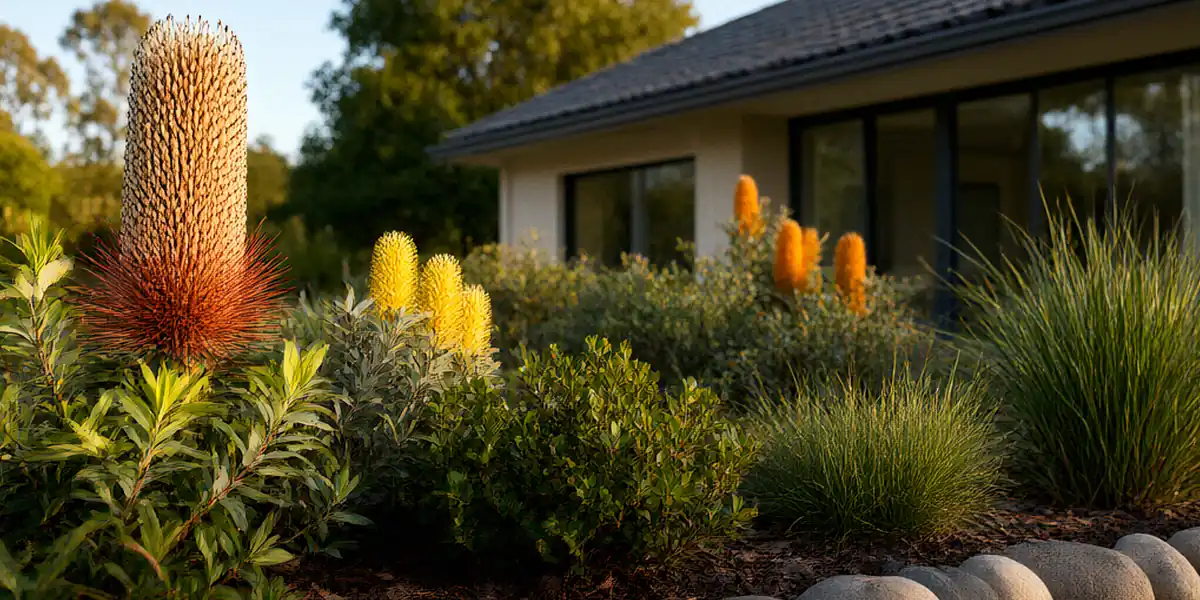
Banksias are the Swiss Army knife of the native garden. They’re drought-tolerant plants once established, they produce some of the most architectural flowers in the Australian flora, and they’re magnets for wildlife. A single banksia in flower can pull in honeyeaters, bees, and even the occasional butterfly from streets away. For a small garden, that’s an enormous return on a modest patch of soil.
Unlike many exotic ornamentals that demand constant watering and feeding, banksias evolved in nutrient-poor Australian soils and are adapted to our climate. That makes them low-maintenance once settled in — a real advantage when space is tight and every plant needs to earn its place.
Drought-Tolerant Plants That Thrive in Australian Conditions
Banksias are proteaceous plants, meaning they belong to the family Proteaceae alongside grevilleas, waratahs, and hakeas. This family has a critical quirk: it’s sensitive to phosphorus. Standard garden fertilisers can kill a banksia, which is why we always steer customers towards native-specific, low-phosphorus products — or none at all.
Once established, most banksias handle extended dry spells with ease. In our own trial garden through a hot, dry summer, our Banksia spinulosa specimens received only occasional deep watering and flowered heavily regardless. For water-wise gardeners, they’re a natural fit alongside other drought-tolerant plants.
Banksias and Biodiversity: Attracting Birds and Bees
The flower spikes — technically inflorescences made up of hundreds of tiny individual flowers — produce copious nectar. Honeyeaters such as the New Holland honeyeater and eastern spinebill are regular visitors, and native bees and honeybees flock to them too. In a small garden, a flowering banksia effectively becomes a wildlife station. If you’re aiming to build habitat value into a compact space, banksias do more per square metre than almost anything else we can recommend.
Choosing the Right Banksia for Your Space
Not all banksias are giants. Several species and cultivars stay compact enough for courtyards, balconies, and small native garden beds. Here are three we regularly recommend to customers with limited space:
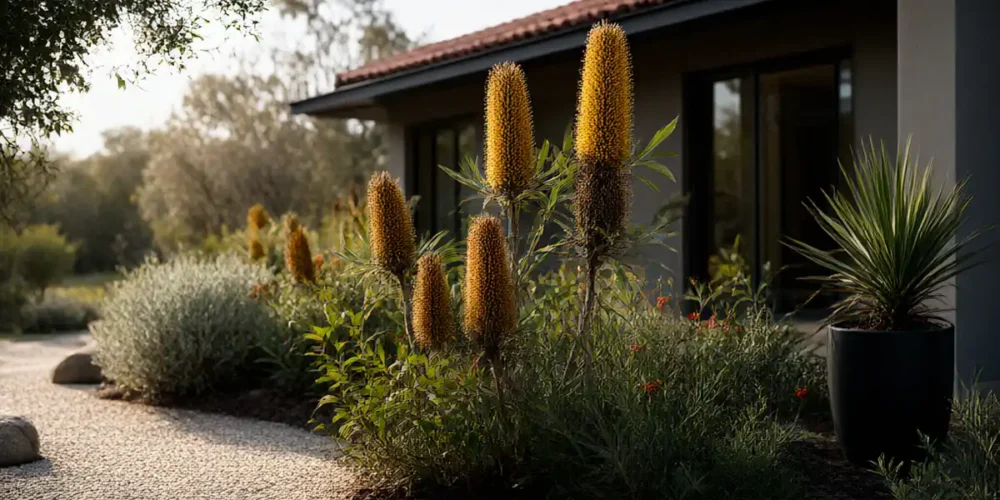
- Banksia spinulosa ‘Birthday Candles’ — a dwarf cultivar growing to about 1m x 1m, ideal for pots and front-of-bed positions. It produces golden-orange flower spikes with red styles, typically in autumn and winter.
- Banksia marginata — a versatile species native to southeastern Australia, including Tasmania. It’s variable in size depending on provenance, with compact inland forms suited to small gardens and coastal forms that handle salt spray. Flowers are pale yellow to golden.
- Banksia ericifolia ‘Little Eric’ — a compact form with orange-red flowers, staying dense and manageable in a small garden. It’s a wonderful bird-attracting choice for larger courtyards.
Each of these offers something slightly different in flower colour and form, so you can match the plant to your design intent rather than the other way around.
Dwarf and Compact Banksia Varieties
Beyond the three above, we also keep an eye out for other compact selections when they’re available. The key is to check the mature size on the label — a plant sold as a small tubestock can still reach 3 metres or more if it’s a full-sized species. Dwarf cultivars like ‘Birthday Candles’ and ‘Little Eric’ have been selected specifically for their restrained habit, making them reliable choices where space is at a premium.
Coastal vs. Inland Species: Matching Your Climate
Provenance matters with banksias. Coastal species such as Banksia integrifolia tolerate salt-laden winds but may struggle in heavy frost. Inland and mountain forms of Banksia marginata, by contrast, handle cold and frost well but prefer protection from direct salt spray. If you’re gardening near the coast, choose coastal-provenance plants; if you’re inland or in a frost hollow, look for cold-hardy forms. Our team is always happy to help match a banksia to your local conditions.
How to Plant and Care for Banksias in Small Gardens
Banksias are forgiving once established, but the first few months matter. Get the fundamentals right and you’ll have a plant that rewards you for decades.
Soil, Sun, and Drainage: Getting the Basics Right
Drainage is non-negotiable. Banksias detest waterlogged roots, and in a small garden where soil can be compacted or heavy clay, you may need to plant on a raised mound or in a large pot with free-draining native potting mix. Full sun is ideal — at least six hours a day — though light afternoon shade is tolerated in hotter regions.
When planting, we dig a hole twice as wide as the root ball but no deeper, backfill with the existing soil amended with coarse sand or native mix, and water in well. Avoid adding rich compost or manure to the planting hole; banksias simply don’t need it and can be harmed by the excess nutrients.
Watering and Fertilizing: What Banksias Really Need
Newly planted banksias need regular watering for the first summer — deep soakings once or twice a week rather than daily light sprinkles. After the first year, most established plants get by on rainfall alone except in prolonged drought.
On fertiliser: less is more. Because banksias are proteaceous and sensitive to phosphorus, use only a native-specific fertiliser with low phosphorus (look for P around 1% or less), applied sparingly in spring. Never use general-purpose or vegetable fertilisers. In our experience, many banksias perform perfectly well with no supplementary feeding at all.
Pruning for Shape and Health
Light pruning after flowering keeps banksias dense and prevents them becoming leggy — a particular concern in small gardens where every centimetre counts. Cut back spent flower spikes and tip-prune the stems behind them. Avoid cutting into old, leafless wood, as banksias often don’t reshoot from bare branches. A gentle annual tidy is all most compact varieties need.
Designing with Banksias: Ideas for Compact Spaces
Banksias work beautifully as feature plants — their flower spikes are sculptural enough to carry a small garden on their own. But they also integrate well into mixed native garden beds, where their texture contrasts nicely with finer foliage.
Banksias in Pots and Courtyards
Dwarf cultivars like ‘Birthday Candles’ are superb in large pots. Choose a pot at least 40cm wide with excellent drainage, use a quality native potting mix, and position it where you can enjoy the flowers up close — and where the birds can find them. A pair of matched pots flanking a doorway or courtyard corner creates real impact without eating floor space.
Combining Banksias with Other Australian Native Plants
For a layered small native garden, we like to pair banksias with:
- Grevillea — especially low-growing or groundcover forms, which flower at different times and extend the nectar season for birds.
- Westringia — tidy, grey-green foliage that makes a calm backdrop for banksia flowers.
- Lomandra and native grasses — for texture at ground level and erosion control on mounds.
The combination of banksia, grevillea, and westringia gives you colour across most of the year, structure, and a steady food supply for local wildlife.
Bush Tucker and Cultural Uses of Banksia
Banksias hold a special place in bush tucker traditions. Indigenous Australians traditionally soaked banksia flowers in water to make a sweet nectar drink — a practice that’s been shared and celebrated for thousands of generations. The nectar-rich spikes were also enjoyed directly. If you’d like to try it yourself, soak a freshly picked flower spike in a bowl of water for a few hours and taste the subtly sweet result. Always forage responsibly and never take flowers from plants in the wild without permission.
Common Problems and How to Solve Them
Banksias are generally tough, but a few issues come up again and again in our customer enquiries. Most trace back to drainage and watering.
Root Rot and Drainage Issues
Yellowing leaves, sudden collapse, and a sour smell around the base usually point to root rot from waterlogged soil. The fix is prevention: plant on a mound, use free-draining mix, and never let pots sit in saucers of water. If a plant is already affected, improve drainage around it immediately and reduce watering. Severely affected plants rarely recover, so getting the soil right from day one is essential.
Pests and Diseases to Watch For
Banksias can attract a few pests, though serious problems are uncommon in home gardens:
- Scale insects — look for sticky residue or small bumps on stems; treat with horticultural oil.
- Caterpillars — occasionally chew flower spikes; usually tolerable and best left for the birds.
- Phytophthora (dieback) — a soil-borne disease favoured by poor drainage; again, prevention through good drainage is key.
Healthy, well-sited banksias resist most problems on their own. If you’re unsure what’s affecting your plant, send us a photo and we’ll help you troubleshoot.
Frequently Asked Questions
Can banksias really grow in pots?
Yes — dwarf cultivars like Banksia spinulosa ‘Birthday Candles’ are excellent in pots. Use a large container with free-draining native potting mix, position it in full sun, and water deeply but infrequently once established.
Why is my banksia not flowering?
The most common causes are insufficient sun, excessive fertiliser (especially phosphorus), or pruning at the wrong time and removing developing flower buds. Ensure at least six hours of sun, avoid feeding, and prune only straight after flowering.
Are banksias safe to plant near other natives?
Absolutely. Banksias combine well with grevilleas, westringias, and native grasses. Just avoid planting them alongside heavy feeders that require rich, phosphorus-heavy fertiliser, as this can harm the banksia.
How often should I water a new banksia?
For the first summer, water deeply once or twice a week. After the first year, most established banksias in the ground need little to no supplementary watering except during extended drought.
Is the nectar from banksia flowers edible?
Yes. Banksia flowers have a long history of use as bush tucker, and Indigenous Australians traditionally soaked the flowers in water to make a sweet nectar drink. Only forage from your own plants or with permission, and never from protected wild populations.
Even the smallest garden can host a banksia — and once you’ve watched a honeyeater work its way along a golden flower spike in a courtyard barely bigger than a car space, you’ll understand why we recommend them so often. Start with a dwarf cultivar like ‘Birthday Candles’ or ‘Little Eric’, get the drainage right, keep the fertiliser in the cupboard, and let the birds do the rest.