Low-Phosphorus Fertiliser Explained: Why Your Native Garden Needs It
A few summers back, a mate of ours proudly showed off the grevillea he’d planted along his front fence. He’d been feeding it the same general-purpose fertiliser he used on his roses, convinced he was doing the right thing. Within weeks, the leaves had gone a sickly yellow, growth had stalled, and by autumn the plant was dead. The culprit wasn’t pests, drought or disease — it was phosphorus. Like most Australian native plants, that grevillea had evolved in soils so nutrient-poor that even a modest dose of phosphorus from a standard fertiliser was toxic. If you’ve ever watched a banksia or waratah decline after a feed, you’ve likely run into the same problem. Here’s why it happens, and how low-phosphorus fertiliser keeps your native garden thriving instead.
Why Australian Native Plants Are Phosphorus-Sensitive
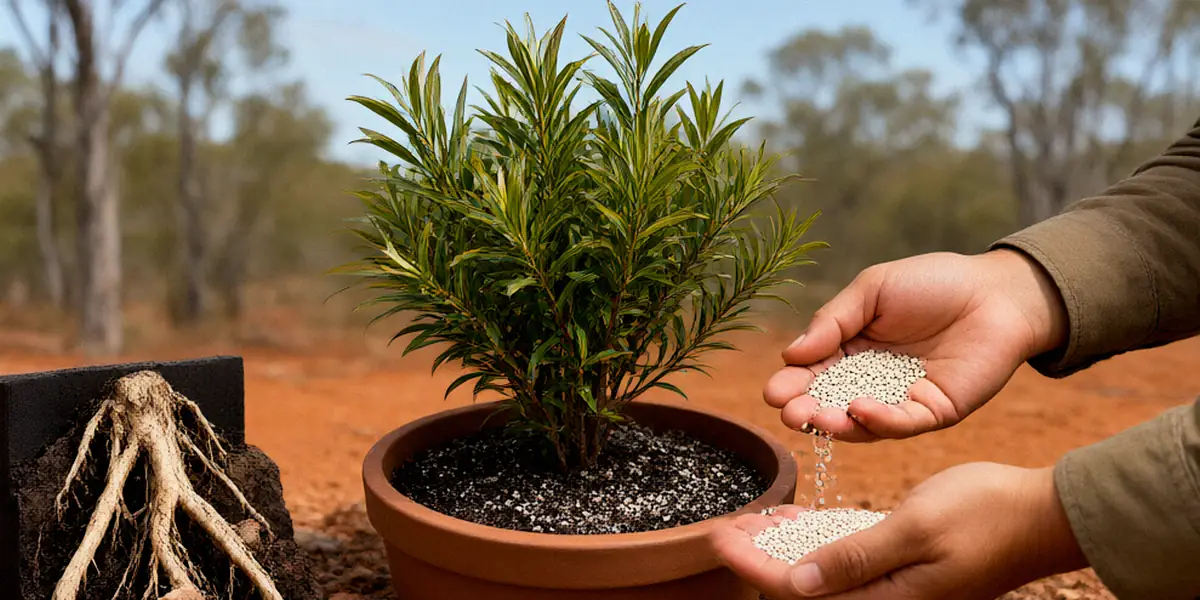
Australia’s soils are ancient and heavily leached. Over millions of years, rainfall has washed most available phosphorus out of the topsoil, and our native flora adapted accordingly. Plants in the Proteaceae family — grevillea, banksia, waratah, hakea and macadamia — are among the most phosphorus-sensitive species on earth. They didn’t just tolerate low-phosphorus soils; they built their entire nutrient strategy around them.
This is why a product designed for veggie patches or roses can be lethal in a native garden. Phosphorus toxicity in these plants causes yellowing leaves, stunted growth and, in severe cases, plant death. The damage often appears within weeks of feeding, and once the root system is affected, recovery is unlikely.
The Role of Cluster Roots in Nutrient Uptake
Many Proteaceae species grow specialised structures called cluster roots (also known as proteoid roots) — dense, fuzzy mats of rootlets that exude organic acids into the soil. These acids unlock phosphorus and other nutrients from tiny pockets of soil that ordinary roots can’t access. It’s a brilliant survival mechanism in a nutrient-poor landscape, but it comes with a catch: cluster roots absorb phosphorus so efficiently that they can take up toxic quantities when the soil is artificially enriched. Even a slow-release general fertiliser can overload the system.
Symptoms of Phosphorus Toxicity in Natives
Watch for these warning signs, especially after fertilising:
- Yellowing leaves, often starting at the tips or between the veins, on otherwise healthy-looking plants
- Stunted growth — new shoots barely extend, and the plant loses its natural vigour
- Leaf drop and dieback from the inside of the canopy outward
- Sudden collapse of the whole plant, sometimes within weeks of feeding
By the time symptoms are obvious, the damage is often irreversible. Prevention is everything with phosphorus-sensitive natives.
What Makes a Fertiliser Low-Phosphorus?
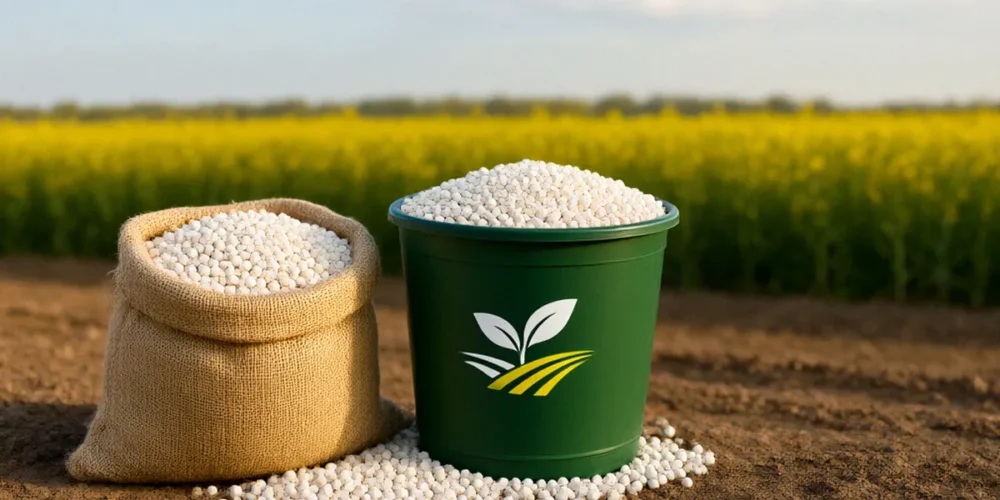
Low-phosphorus fertilisers typically contain less than 2% phosphorus. Compare that to a standard all-purpose fertiliser, which might sit anywhere from 5% to 15% phosphorus. For a grevillea or banksia, that difference is the gap between thriving and dying.
In Australia, several brands are formulated specifically for natives. Bush Tucker (both the Bush Tucker Native Plant Food and Neutrog’s Bush Tucker range) and Osmocote Native Gardens are the names you’ll see most often on nursery shelves. They’re designed around the nutrient profile of Australian soils, with low phosphorus and boosted trace elements.
Understanding NPK Ratios for Natives
Every fertiliser label shows an NPK ratio — nitrogen, phosphorus and potassium. For native plants, a suitable ratio looks something like 8-1-5 or 10-1-6, where the middle number (phosphorus) stays very low. Anything with a phosphorus percentage above 2% is best avoided for Proteaceae. Nitrogen supports leafy growth, potassium helps flowering and root health, and trace elements like iron, magnesium and manganese fill the gaps that Australian soils often lack — particularly in sandy or limestone-based gardens.
Recommended Phosphorus Levels for Different Native Plants
Not every native is equally sensitive. As a general guide:
- Highly sensitive (under 1% P): Grevillea, banksia, waratah, hakea, macadamia, grass trees
- Moderately sensitive (under 2% P): Most eucalypts, callistemon, melaleuca, leptospermum
- More tolerant (still under 3% P): Kangaroo paw, westringia, native grasses and some lomandra
Even the tolerant group does best on a native-specific formula. When in doubt, go lower.
When and How to Apply Low-Phosphorus Fertiliser
Timing matters as much as product choice. Spring and early autumn are the best times to fertilise Australian natives — the soil is warm, roots are actively growing, and plants can use the nutrients before summer heat or winter cold sets in. Avoid feeding during drought, heatwaves or the depths of winter, when stressed plants can’t process extra nutrients and root burn becomes a real risk.
Dosage is where most gardeners come unstuck. Always start with half the recommended rate on the label, especially for newly planted specimens. More is not better — over-fertilising is one of the most common ways to kill a healthy native.
Spring and Autumn: The Ideal Feeding Windows
In most of Australia, a light feed in early spring (September to October) supports the main growth flush, while a second application in early autumn (March to April) helps plants consolidate before winter. In tropical and subtropical regions, adjust to the start of the wet season. Skip feeding altogether if the plant is flowering heavily or recovering from transplant shock.
Liquid vs. Granular: Which to Choose
Both formats have a place in a native garden:
- Liquid fertilisers (like diluted Bush Tucker Native Plant Food) act fast and are easy to control. They’re ideal for potted natives, seedlings and giving a quick boost to established plants.
- Slow-release granules (such as Osmocote Native Gardens) feed steadily over months and suit garden beds and larger shrubs. Yates Dynamic Lifter is a popular organic option, but check the phosphorus content — it’s higher than many natives can handle, so use sparingly or choose a native-specific alternative.
Whichever you choose, water the plant before and after application, and keep granules away from direct contact with stems and trunk.
Common Mistakes to Avoid with Native Plant Fertilisers
Even experienced gardeners make these errors. The Australian Native Plants Society regularly fields questions from members who’ve lost plants to simple fertiliser missteps. Here are the big ones.
Using the Wrong Product on Grevilleas and Banksias
General-purpose fertilisers, rose foods, citrus foods and lawn fertilisers are all far too high in phosphorus for grevilleas and banksias. Even “all-purpose” native blends sold at some discount stores can be risky if they’re not specifically formulated for phosphorus-sensitive species. Always read the NPK label before buying.
Over-Fertilising and Root Burn
More fertiliser does not mean more flowers. Excess nutrients — even low-phosphorus ones — can burn cluster roots, cause salt build-up in the soil and trigger leaf scorch. Stick to the label rate, feed only in the growing seasons, and never fertilise a dry or heat-stressed plant.
Other mistakes worth avoiding:
- Ignoring soil pH — most natives prefer slightly acidic to neutral soil (pH 5.5–7), and nutrients lock up outside that range
- Feeding newly planted natives in their first few months, when roots are still establishing
- Assuming all natives have identical needs — kangaroo paw and westringia are more forgiving, but still benefit from low-phosphorus formulas
Our Favourite Low-Phosphorus Fertilisers for Australian Gardens
We’ve trialled a lot of products in our own native garden, from sandy coastal blocks to heavy clay in the hills. These three consistently deliver.
Bush Tucker Native Plant Food: A Balanced Choice
Bush Tucker Native Plant Food is formulated specifically for Australian natives, with low phosphorus and a solid trace element profile including iron and magnesium. We like it because it’s gentle enough for young plants, easy to dilute for pots, and widely available at Bunnings and independent nurseries. It’s our go-to for potted grevilleas and newly established tube stock.
Neutrog Bush Tucker: Organic and Slow-Release
Neutrog’s Bush Tucker range is biologically active, meaning it feeds soil microbes as well as plants. The slow-release pellets break down over weeks, reducing the risk of root burn and providing steady nutrition through spring and autumn. It’s a fantastic choice for in-ground banksias, waratahs and mixed native beds. We’ve seen noticeable improvements in flower density after a season on Neutrog.
Rounding out our top three is Osmocote Native Gardens — a controlled-release granule that’s simple to apply and lasts up to six months. It’s a reliable set-and-forget option for busy gardeners.
FAQ
Can I use regular fertiliser on Australian native plants?
No — not on phosphorus-sensitive species like grevillea, banksia and waratah. Standard fertilisers usually contain 5–15% phosphorus, which is toxic to these plants. Always choose a native-specific product with less than 2% phosphorus.
What are the signs my native plant has phosphorus toxicity?
Look for yellowing leaves (often between the veins), stunted growth, leaf drop and sudden collapse. Symptoms usually appear within weeks of feeding with a high-phosphorus product, and severe cases are usually fatal.
When is the best time to fertilise Australian natives?
Spring and early autumn are ideal. The soil is warm, roots are active, and plants can use the nutrients efficiently. Avoid feeding during extreme heat, drought or deep winter.
Are all native plants phosphorus-sensitive?
No. The Proteaceae family (grevillea, banksia, waratah, hakea) is highly sensitive, while plants like kangaroo paw, westringia and most eucalypts are more tolerant. Even so, all Australian natives perform best on low-phosphorus formulas.
Do I need a soil test before fertilising?
It’s a smart first step, especially if you’re planting into new ground or your natives have struggled. A soil test tells you your existing phosphorus levels, pH and trace element profile, so you can choose the right product and dose.
Getting fertiliser right is one of the simplest ways to keep Australian native plants healthy for decades. Start with a soil test, choose a reputable native-specific product like Bush Tucker, Neutrog or Osmocote Native Gardens, feed lightly in spring and early autumn, and your grevilleas, banksias and bush tucker plants will reward you with vigorous growth and abundant flowers season after season.