
Drought-Tolerant Natives for Hot Summers: Our Picks for a Resilient Garden
It’s 3pm on a 42°C day in February. The lawn is crunchy underfoot, the roses have given up entirely, and you’re standing at the tap wondering whether watering is even worth it. We’ve been there — most of our team has killed a water-hungry garden through at least one brutal Australian summer. That’s exactly why we’ve spent years trialling drought-tolerant Australian native plants in our own gardens, from a Queensland trial patch to sandy Perth soils. This is our shortlist of the natives that not only survive the heat but look genuinely good doing it.
Why Australian Natives Are Built for Heat
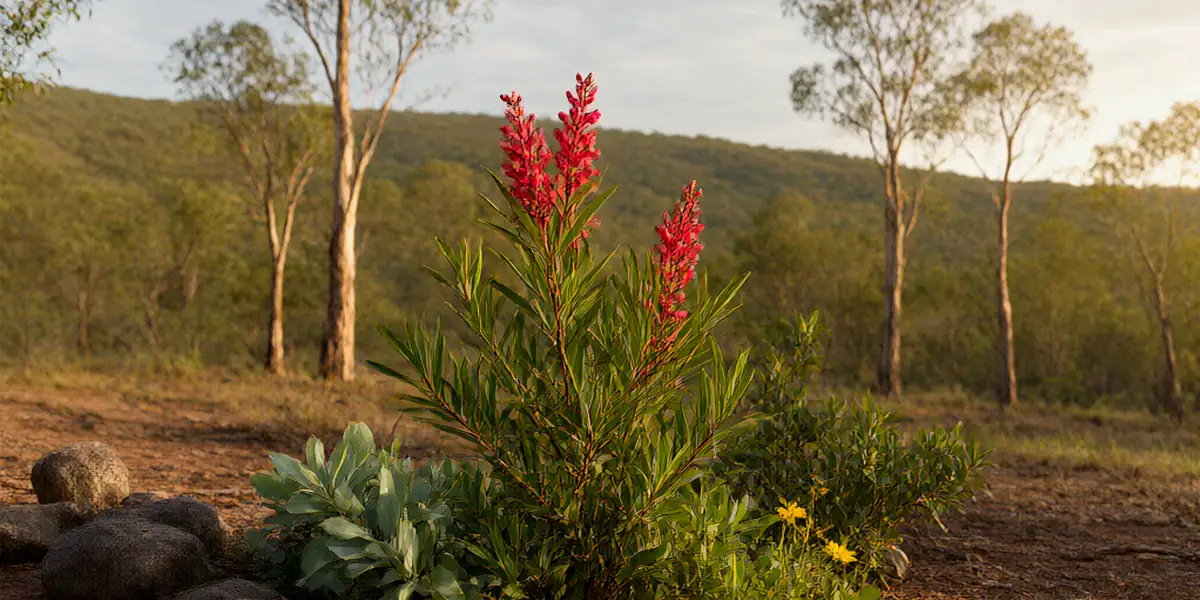
Australian native plants have had millions of years to work out how to handle drought, intense UV and nutrient-poor soils. The CSIRO’s climate-ready gardening research makes the point clearly: as our summers get hotter and rainfall becomes less predictable, species that evolved here are far better equipped than most exotic ornamentals. Their survival tricks aren’t just romantic — they’re measurable adaptations.
Sclerophyll Leaves and Water Retention
Sclerophyll means “hard-leaved,” and it’s the secret behind plants like grevillea, banksia and eucalypt. These leaves are thick, leathery and often coated in wax or fine hairs, which reduces moisture loss through transpiration. Many are also angled or rolled to minimise the surface exposed to the midday sun. In practice, this means a sclerophyll plant can keep photosynthesising on very little water — something a soft-leaved hydrangea simply can’t do.
Deep Roots and Summer Dormancy
Below the surface, many natives send roots metres down to reach moisture that never disappears, even in a dry summer. Others take a different approach: they slow down. Summer dormancy means growth pauses, flowering finishes before the worst heat, and the plant effectively waits it out. If your native looks quiet in January, that’s often not a problem — it’s strategy.
Our Top Grevillea Picks for Hot, Dry Gardens
Grevillea is the genus we recommend most often to new native gardeners, and for good reason. They flower through the toughest months, need minimal water once established, and pull in honeyeaters like nothing else. Our team’s trial garden in south-east Queensland has put dozens of varieties through consecutive hot summers — these two have never let us down.
Grevillea ‘Robyn Gordon’: A Reliable Performer
Grevillea ‘Robyn Gordon’ is a dense, rounded shrub growing to around 1.5 metres, with large red toothbrush-style flowers that appear almost year-round in warmer climates. It’s a hybrid of Grevillea bipinnatifida and Grevillea banksii, and it inherited the best of both: tough foliage, generous flowering and real heat tolerance. Give it full sun and well-drained soil, water it deeply through its first summer, and after that it largely looks after itself.
Grevillea banksii: Coastal Toughness
Grevillea banksii, the red silky oak, is a Queensland and northern NSW native that handles coastal humidity, salt wind and baking sun without complaint. It’s fast-growing and can reach 3 to 4 metres, making it useful as a screening shrub. The creamy-white or red flower spikes are magnets for birds. One caution from our experience: it resents heavy clay, so mound-plant it or add gypsum and coarse mulch if your soil holds water.
Beyond Grevillea: Other Drought-Tolerant Natives We Love
Grevillea gets the glory, but a resilient native garden needs variety in shape and texture. These three earn their place in any water-wise planting scheme.
Westringia: The Unsung Hero
Westringia fruticosa ‘Wynyabbie Gem’ is one of the most versatile natives you can plant. It’s a compact form of coastal rosemary, growing to about 1.5 metres with soft grey-green foliage and pale mauve flowers nearly all year. It clips beautifully into hedges, tolerates frost and coastal exposure, and once established it survives on rainfall alone in many parts of southern Australia. If you want a native that looks tidy with almost no effort, start here.
Callistemon and Acacia for Structure
Callistemon (bottlebrush) brings vertical structure and those unmistakable cylindrical flowers that feed lorikeets and honeyeaters. Most cultivars handle heat and periodic flooding alike. Acacia boormanii, the Snowy River wattle, is a smaller, frost-hardy species with fine blue-grey foliage and masses of golden balls in late winter — ideal for colder inland gardens where tropical grevilleas struggle.
- Westringia fruticosa ‘Wynyabbie Gem’ — hedging, frost and coast tolerant
- Callistemon cultivars — bird-attracting, tolerates wet and dry
- Acacia boormanii — frost-hardy, golden winter flowers, great for inland
Bush Tucker Plants That Beat the Heat
Some of the toughest natives also happen to be delicious. Bush tucker species are worth planting for the harvest as much as the foliage, and the best of them are genuinely drought-hardy. Source plants from a reputable specialist — we’ve had consistently good results with stock from Kuranga Native Nursery in Victoria, and their range of food plants is excellent.
Muntries: Sweet and Hardy
Muntries (Kunzea pomifera) is a low, spreading groundcover from southern Australia that produces small, apple-flavoured berries in late summer. It thrives in sandy, well-drained soil, tolerates wind and salt, and needs very little supplementary water once established. The berries are lovely fresh or made into chutney — and the plant itself makes a tough, attractive carpet under taller shrubs.
Quandong: The Desert Peach
Quandong (Santalum acuminatum) is a semi-parasitic small tree from arid and semi-arid Australia, famous for its bright red fruit and nut-like seed. It’s slow-growing but extremely tough, and the fruit makes outstanding jams and pies. Be aware it needs a host plant nearby — it draws some nutrients from neighbouring roots — so plant it among established natives rather than in isolation.
Designing a Water-Wise Native Garden
Plant choice is only half the story. How you arrange and maintain your garden determines how much water it actually needs. The Australian Native Plants Society has excellent regional guidance on species selection, and their local groups are a goldmine if you’re new to native gardening.
Hydrozoning: Grouping for Efficiency
Hydrozoning means grouping plants with similar water needs together, so you’re not overwatering tough plants to keep a thirsty one alive. Put your highest-water species in one zone near the tap or a rainwater tank, and let your established grevilleas, westringias and acacias occupy the drier zones further out. This alone can cut garden water use dramatically.
Mulch Matters: Our Top Choices
Our team’s favourite mulch for native gardens is coarse eucalyptus mulch. It’s slow to break down, doesn’t compact, and mimics the natural leaf litter many natives evolved with. Apply it 7–10cm deep, keeping it clear of trunks to avoid collar rot. Avoid fine, moisture-holding mulches and fresh manures, which can overwhelm phosphorus-sensitive species like banksias and grevilleas.
Caring for Your Natives in Extreme Heat
Even tough plants appreciate a little help through their first summers and during record-breaking heatwaves. Our team in Perth has learned these lessons the hard way, through 40°C-plus stretches and long dry spells.
Watering Deeply, Not Often
Deep watering encourages deep roots. Give established plants a long, slow soak every couple of weeks in summer rather than a daily sprinkle. New plantings need more attention — two or three deep waterings a week through their first summer. The single best thing you can do is plant in autumn, so roots establish before the heat arrives.
Post-Heatwave Pruning Tips
After a severe heatwave, wait a few weeks before pruning. Some stems that look dead will reshoot once conditions ease. When you do prune, cut back to healthy green wood, remove genuinely dead material, and avoid heavy shaping in the middle of summer — light tip-pruning is enough to tidy up scorched growth.
Frequently Asked Questions
What is the most drought-tolerant Australian native plant for a beginner?
Westringia fruticosa ‘Wynyabbie Gem’ is our top pick for beginners. It handles heat, frost and coastal conditions, needs little water once established, and responds well to pruning even if you make mistakes.
Do Australian native plants need fertiliser?
Most need very little, and many are sensitive to phosphorus. Avoid standard fertilisers and use a low-phosphorus native-specific blend sparingly in spring, if at all. Overfeeding can do more harm than good.
When is the best time to plant drought-tolerant natives?
Autumn is ideal across most of Australia. Soil is still warm, rainfall is typically more reliable, and plants have months to establish roots before their first summer.
Can I grow grevilleas in clay soil?
Yes, with preparation. Grevilleas need drainage, so mound-plant them, add gypsum to break up clay, and mulch with coarse material. Avoid planting into a waterlogged hole.
Where can I buy bush tucker plants like muntries and quandong?
Specialist native nurseries are your best bet. Kuranga Native Nursery stocks a strong range of bush tucker species, and local Australian Native Plants Society groups can point you to suppliers in your region.
With the right native plant choices, an Australian garden can look lush and generous even through the worst of summer — no daily watering marathon required. Start with a few tough grevilleas, add westringia and a bush tucker species or two, mulch well, and let the garden do the hard work. We’d love to hear which natives have thrived in your patch, so share your successes (and your failures) with us — that’s how we all learn what works.