Natives That Attract Birds and Bees: Our Picks for a Living Garden
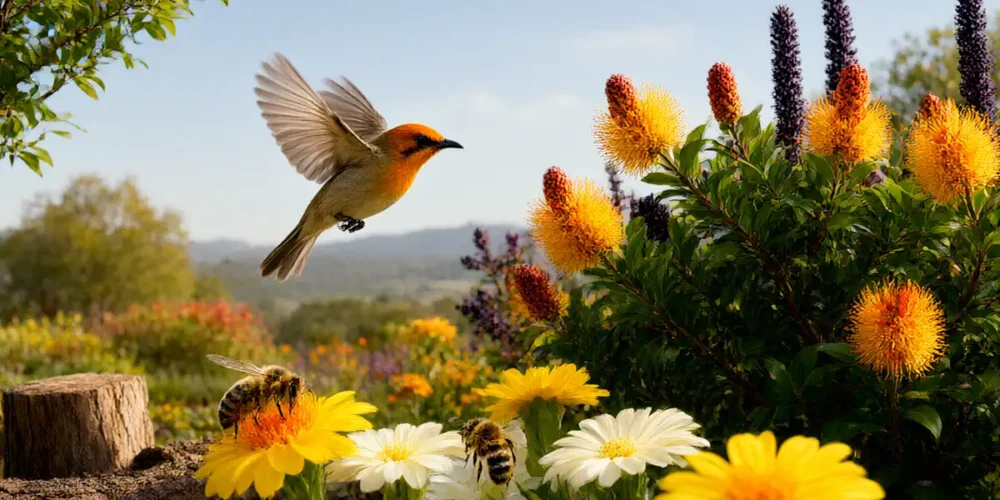
Stand quietly in a garden planted with grevilleas and westringias on a warm October morning and you’ll hear it before you see it: the low, throaty hum of native bees working the flowers, punctuated by the sharp “chink” of a New Holland honeyeater darting between blooms. It’s a soundscape that most suburban gardens, filled with jasmine and agapanthus, simply don’t have. The good news is that turning a quiet block into a living one doesn’t take much — a handful of well-chosen Australian native plants will do more for local wildlife than a whole nursery aisle of exotics. This is our practical, opinionated guide to the plants we’d actually put in the ground, from the grevilleas that never stop flowering to the bush tucker species that feed bees and your kitchen at the same time.
Why Australian Native Plants Are a Magnet for Birds and Bees
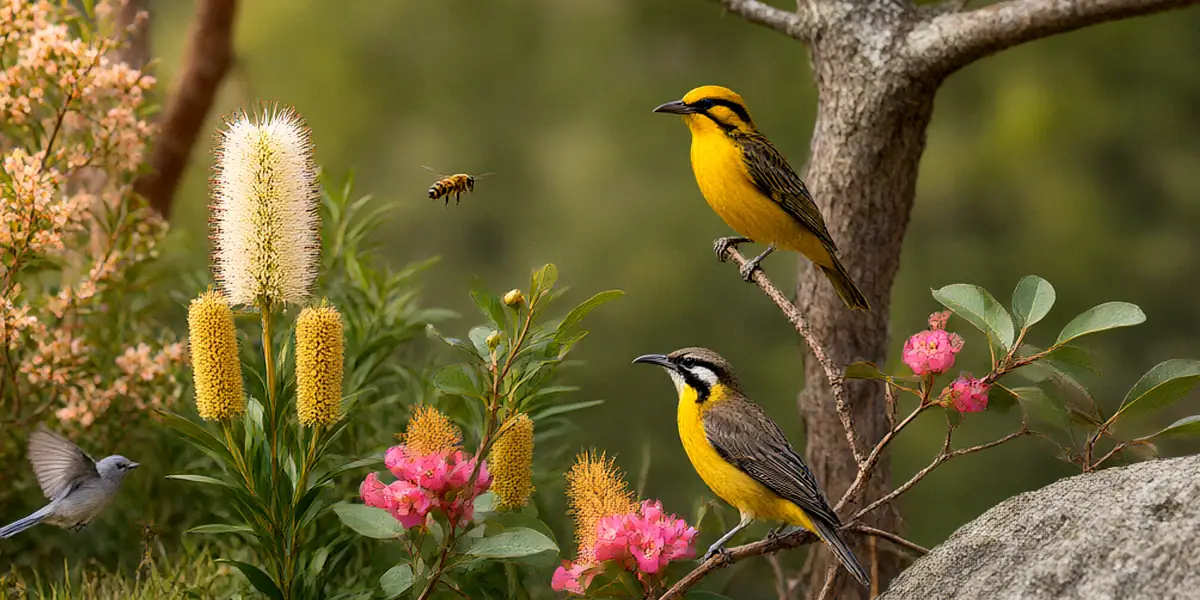
Our wildlife didn’t evolve alongside roses or lavender. It evolved alongside the plants that have grown here for millions of years, and that history shows up in every flower shape, nectar reward and flowering season. Plant a native garden and you’re essentially reinstating the menu that blue-banded bees, honeyeaters and countless other species have been reading for millennia.
The Co-Evolution Story: Why Locals Love Locals
Take the grevillea. Its flower isn’t a single bloom but a cluster of tiny flowers arranged in what’s often called a spider or toothbrush shape — a structure built specifically to deposit pollen onto the heads of birds and large insects as they push in for nectar. Many eucalypts and banksias follow the same logic, offering generous nectar rewards timed to the seasons when local pollinators are most active. Exotic plants, by contrast, are often pollinated by species that don’t exist here, so they offer little or nothing to Australian wildlife even when they look lush.
Nectar, Pollen and Habitat: What Wildlife Really Needs
It’s not just about flowers. A productive native garden delivers on several fronts at once:
- Nectar for honeyeaters, lorikeets, butterflies and native bees, including the striking blue-banded bee, which is a devoted visitor to grevillea and westringia.
- Pollen as protein for bees and other insects, particularly important for native bee larvae.
- Seeds for parrots, finches and cockatoos, especially from wattles and banksias.
- Habitat in the form of dense shrubs, prickly foliage and bark for nesting, roosting and shelter from predators.
When you plant a native garden, you’re not just adding colour. You’re rebuilding a small, functioning ecosystem — and the blue-banded bees and New Holland honeyeaters will find it remarkably quickly.
Our Favourite Grevillea Varieties for Pollinators
If we had to pick one genus to build a wildlife garden around, it would be grevillea. There are hundreds of species and cultivars, most of them flowering for months on end, and almost all of them irresistible to honeyeaters. These are the three we recommend most often to Australian gardeners.
Grevillea ‘Robyn Gordon’ and ‘Superb’: Reliable Bird Magnets
Grevillea ‘Robyn Gordon’ is a long-flowering hybrid that reliably attracts honeyeaters — we’ve watched eastern spinebills and noisy miners work the same bush for twenty minutes straight. It grows to around two metres, handles a range of soils and, with a light tip-prune after each flush, will flower almost year-round in frost-free areas. Grevillea ‘Superb’ is its slightly more compact cousin, with softer orange-pink blooms and the same magnetic pull on birds. Both are grafted in many nurseries, which helps them cope with heavier soils and humidity.
Grevillea lanigera: A Compact Option for Small Gardens
Grevillea lanigera, often sold as ‘Mt Tamboritha’ or ‘Coastal Gem’, is the grevillea we recommend for courtyards, verges and front gardens where space is tight. It stays low and spreading, tolerates light frost and coastal wind, and produces creamy-pink spider flowers through winter and spring — exactly when nectar is scarcest. It’s also a favourite of blue-banded bees, which seem to prefer its smaller flowers over the big hybrids.
Bush Tucker Plants That Feed Bees and People
One of the great pleasures of a native garden is that the same plant feeding your local bees can also end up in your kitchen. We grow bush tucker species for both reasons — the wildlife value comes first, but the harvest is a genuine bonus.
Lemon Myrtle and Wattleseed: Flowers, Flavour and Forage
Lemon myrtle (Backhousia citriodora) is a bush tucker plant whose flowers feed bees — fluffy white clusters that appear in summer and draw in native bees and hoverflies in numbers. The leaves, rich in citral, are one of the most useful native flavours you can grow, working in everything from shortbread to tea. Wattleseed, harvested from various Acacia species, offers golden ball-shaped flowers that bees adore in late winter and spring, followed by edible seeds you can roast and grind for coffee or damper. Both are worth planting in any productive native garden.
Finger Lime: A Rainforest Treat for Bees and Cooks
Finger lime (Citrus australasica) is a rainforest understorey plant with small, fragrant white flowers that native bees work heavily in spring. Come autumn, you’re rewarded with the famous citrus pearls — little vesicles of juice that burst in the mouth and lift everything from oysters to gin. It prefers part shade, shelter from heavy frost and consistent moisture, so it’s a good fit for a sheltered corner rather than an exposed hot bed.
Drought-Tolerant Natives for a Water-Wise Wildlife Garden
You don’t have to choose between a water-wise garden and a wildlife-friendly one. Some of the toughest Australian natives are also among the best nectar producers, which makes them ideal for hot, dry sites where irrigation is limited.
Westringia and Callistemon: Hardy Heroes of the Dry Garden
Westringia fruticosa is a drought-tolerant native often used in water-wise gardens, and for good reason: it shrugs off coastal exposure, poor soil and long dry spells while producing small mauve or white flowers almost continuously. Blue-banded bees love it, and it clips neatly into low hedges. Callistemon (bottlebrush) provides nectar for birds and bees across Australia, with its unmistakable cylindrical brushes in red, pink or cream. Callistemon ‘Little John’ and ‘Kings Park Special’ are two of the most reliable performers we’ve grown.
Banksia: Big Rewards for Birds in Tough Conditions
Banksias are the heavyweights of the wildlife garden. Once established, species such as Banksia integrifolia, Banksia spinulosa and Banksia marginata need very little water, yet they produce large, nectar-rich cones that feed honeyeaters, lorikeets and even small mammals. They’re slow to settle in, so give them a well-drained spot, mulch lightly and resist the urge to overwater. The payoff lasts decades.
Designing Your Native Garden for Year-Round Activity
A wildlife garden isn’t just a collection of good plants — it’s a layout. Get the design right and you’ll have birds and bees visiting every month of the year, not just in a spring flush.
Staggering Blooms: A Calendar for Constant Nectar
Choose plants whose flowering times overlap and extend across the seasons. A simple approach we use:
- Late winter to spring: Grevillea lanigera, wattleseed, hakeas.
- Spring to summer: Grevillea ‘Robyn Gordon’ and ‘Superb’, callistemon, westringia.
- Summer to autumn: Lemon myrtle, banksia, finger lime.
- Autumn to winter: Grevillea ‘Superb’ (second flush), banksia, correas.
Even a modest mix of six or eight species will cover most of the year if you pick them deliberately.
Layering and Clustering: Small Changes, Big Wildlife Impact
Plant in clusters rather than scattering single specimens — bees forage more efficiently when they can move between several of the same flower, and birds prefer a dense patch of cover to a lonely shrub. Build layers, from groundcovers like Myoporum and Dichondra up through mid-storey grevilleas and westringias to taller banksias and eucalypts. Add a shallow water source, keep it topped up, and never spray pesticides. A layered native garden from groundcovers to tall shrubs keeps birds and bees visiting across seasons.
Common Mistakes We See in Wildlife-Friendly Native Gardens
We’ve visited hundreds of native gardens across Australia, and the same handful of mistakes come up again and again. Most are easy to fix once you spot them.
Over-Pruning and Pesticides: Silent Pollinator Killers
Grevilleas flower on the ends of their stems, so hard annual pruning can strip away an entire season’s nectar. A light tip-prune after flowering is all most need. And any insecticide — even a “natural” pyrethrum spray — will kill the bees and beneficial insects you planted the garden for. If you must treat a pest, target it precisely and never spray open flowers.
Single Specimens vs. Productive Plantings
A lone grevillea in a lawn might look tidy, but it offers little habitat and forces pollinators to travel between isolated food sources. Group three or more of the same species, or cluster complementary plants with overlapping bloom times, and you’ll see a dramatic jump in activity. Even a drought-tolerant plant needs careful placement to support bees and birds — full sun, shelter from strong wind, and a spot where it can grow to its natural shape without constant clipping.
FAQ
Which Australian native plants are best for attracting birds?
Grevilleas are the standout, particularly Grevillea ‘Robyn Gordon’ and Grevillea ‘Superb’, which flower for months and reliably attract honeyeaters. Banksias and callistemons (bottlebrush) are close behind, and any of them planted in clusters will bring birds into even a small garden.
What plants do blue-banded bees like?
Blue-banded bees are native Australian pollinators that love grevillea and westringia in particular. They also work lemon myrtle, callistemon and many smaller-flowered natives. Planting several of these in a sunny, pesticide-free spot gives them a reliable food source across the year.
Are bush tucker plants good for pollinators?
Yes. Lemon myrtle (Backhousia citriodora), wattleseed and finger lime all produce flowers that feed native bees, and they give you an edible harvest as well. We grow them for both reasons — the wildlife value comes first, but the kitchen rewards are real.
Can I create a wildlife-friendly garden with drought-tolerant plants only?
Absolutely. Westringia fruticosa, callistemon and most banksia species are tough, low-water plants that still deliver plenty of nectar. Once established, they need little irrigation and will keep birds and bees visiting through hot, dry summers.
How do I stop grevilleas getting leggy and still support wildlife?
Tip-prune lightly after each flowering flush rather than cutting hard into old wood. This keeps the plant bushy and encourages repeat blooms without removing the flowering tips that honeyeaters and bees depend on.
A thoughtfully planted native garden rewards you with birdsong at dawn, a constant hum of bees through the warm months, and a landscape that feels authentically Australian rather than borrowed from somewhere else. You don’t need to replant the whole yard — start with one or two grevillea or bush tucker plants this weekend, put them in a sunny spot, and let the local wildlife tell you what it thinks.