
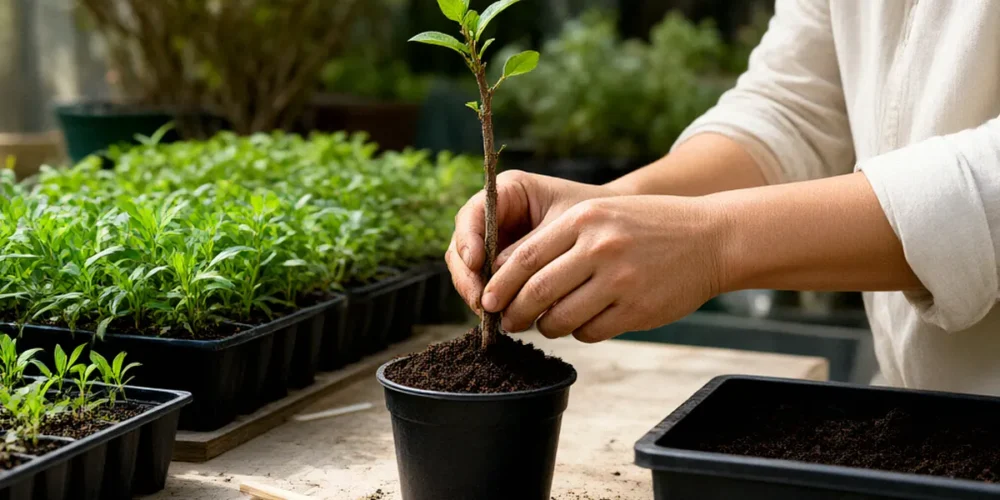
Propagating Natives from Cuttings: A Hands-On Guide for Australian Gardeners
The first time we tried taking cuttings from a grevillea, it was an unmitigated disaster. We snipped a handful of soft, sappy tips in the middle of a hot January afternoon, dunked them in water, and left them on the bench while we made a cup of tea. By the next morning they had wilted into sad little green noodles, and three weeks later every single one had turned brown and died in a pot of ordinary garden soil. We learned the hard way that native plants do not forgive sloppy technique. But once we understood a few fundamentals — timing, wood type, hygiene, and humidity — everything changed. Cuttings became our favourite way to clone a standout plant, whether it is a particularly red Grevillea ‘Robyn Gordon’ or a lemon myrtle that produces exceptional foliage. Here is everything we wish we had known at the start.
Why Propagate Australian Native Plants from Cuttings?
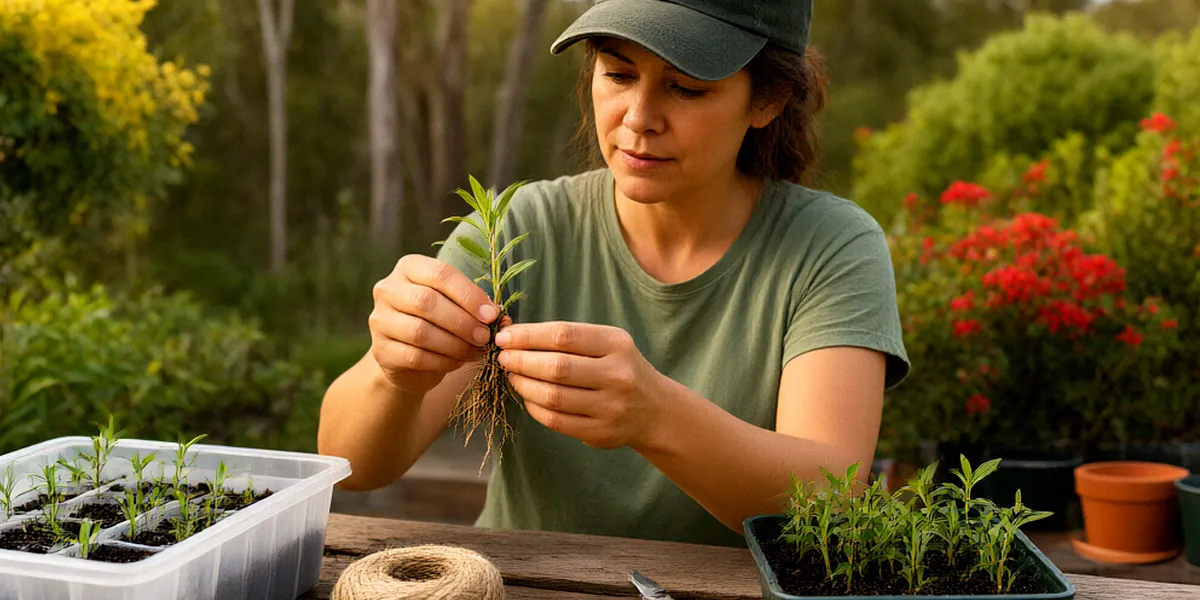
Seed is wonderful for biodiversity, but it is a lottery. Many of our best-loved Australian native plants are hybrids or selected forms, and seed-grown offspring simply will not come true. Cuttings give you an exact genetic copy of the parent plant, which matters enormously when you are trying to reproduce a specific flower colour, growth habit, or flavour profile.
True-to-Type Clones for Your Native Garden
When you take a cutting, you are essentially making a clone. That means the new plant will flower the same colour, grow to the same shape, and perform the same way in your native garden as the parent. For anyone designing a coordinated landscape — say a row of matched melaleucas or a hedge of westringia — this consistency is invaluable. It is also the only reliable way to keep a prized specimen going if the original is lost to storm damage or old age.
Faster Results Than Seed-Grown Natives
Seed-grown natives can take years to reach flowering size, and some species need smoke treatment, stratification, or scarification just to germinate. Cuttings skip all of that. A healthy semi-hardwood cutting taken in late summer can be flowering within 12 to 18 months, whereas the same plant grown from seed might take three to five years. Many bush tucker plants, including lemon myrtle (Backhousia citriodora) and mountain pepper (Tasmannia lanceolata), root far more reliably from semi-hardwood cuttings than they do from seed, which is why commercial growers rely on cuttings for these species.
Preserving Rare or Hybrid Grevillea Varieties
Grevillea ‘Robyn Gordon’ is a popular hybrid that must be propagated from cuttings to retain its red flowers. Grow it from seed and you will get something unpredictable — often a washed-out pink or a plant that never flowers well at all. The same applies to countless other named grevillea cultivars, grafted standards, and dwarf forms. If you want the plant on the label, you need cuttings.
When and How to Take Cuttings from Natives
Timing is everything. Take cuttings when the parent plant is actively growing but not pushing out soft new spring flushes, and always work in the cool of the morning when the plant is fully hydrated.
Best Seasons for Grevillea, Banksia, and Melaleuca
In southern Australia, late summer to autumn is the sweet spot for most grevillea and banksia. The stems have firmed up after spring growth but the plant is still metabolically active. For tropical species, spring is usually better — the humidity is rising and the plant is entering its main growth phase. Melaleuca is forgiving and can be struck in either window, though we get the best strike rates in autumn.
Choosing Semi-Hardwood vs. Softwood Cuttings
Semi-hardwood is the gold standard for most natives. The stem should snap cleanly when bent, not bend like rubber (too soft) and not crack like a twig (too hard). Softwood cuttings root quickly but rot just as fast, and hardwood takes so long that most home propagators lose patience. Avoid flowering tips entirely — they divert energy into flower development instead of roots.
Tools and Hygiene: Why We Use Methylated Spirits
We wipe our secateurs and snips with methylated spirits between every plant. It takes ten seconds and prevents spreading fungal spores or bacteria from one mother plant to the next. Blunt blades crush stems and invite rot, so sharpen regularly. A clean cut matters more than most people realise.
Step-by-Step: Preparing and Planting Your Cuttings
Once you have your material, work quickly and keep cuttings shaded and moist. The whole process from cut to pot should take less than an hour.
Making the Cut: Node, Length, and Leaf Removal
Cut just below a node — that is where the root cells are most concentrated. Aim for a cutting around 8 to 12 centimetres long with two or three nodes. Strip the lower leaves so that at least half the stem is bare, and if the remaining leaves are large, cut them in half to reduce moisture loss.
- Take the cutting just below a node with clean, sharp secateurs.
- Remove lower leaves and any flower buds.
- Dip the base into rooting hormone.
- Insert into pre-moistened propagation mix.
- Firm gently and place under a humidity dome.
Rooting Hormones: Gel vs. Powder for Natives
We like Yates Clonex gel for most semi-hardwood natives because it clings to the stem and does not wash off. Richgro rooting powder is a solid budget alternative and works well for melaleuca and westringia. Gels tend to give slightly better results on tricky species, but the difference is marginal if your hygiene and humidity are dialled in.
The Perfect Propagation Mix for Drought-Tolerant Plants
Drought-tolerant plants still demand excellent drainage at the cutting stage. We use a 50/50 blend of coarse sand and peat, or a commercial seed-raising mix lightened with perlite. Never use garden soil — it compacts, harbours pathogens, and drains poorly. For tricky species like Banksia spinulosa, we add bottom heat to keep the root zone at around 22 to 25°C.
Caring for Cuttings Until They Root
This is where most home propagators either succeed or lose the lot. Consistency matters far more than any secret trick.
Humidity, Light, and Temperature Control
Aim for high humidity, bright indirect light, and a temperature around 20 to 25°C. A propagation tray with a clear humidity dome works beautifully. Open the dome briefly every few days to allow air exchange and prevent mould.
Avoiding Rot: Our Top Tips for Healthy Roots
Overwatering is the number one killer, especially in humid Queensland where fungal issues explode overnight. Water only when the mix feels barely moist, and never let cuttings sit in a saucer of water. Every two weeks, mist with a diluted seaweed solution such as Seasol — it feeds gently and helps reduce stress.
When to Pot Up: Signs Your Cutting Has Rooted
Rooting times vary widely. Grevillea typically roots in 4 to 6 weeks, while Banksia spinulosa cuttings often require bottom heat and can take 8 to 12 weeks to root. You will know roots have formed when new growth appears at the tips and the cutting resists a gentle tug.
Hardening Off and Planting Your New Natives
Rooted cuttings are tender. They need a gradual transition from the cosy dome to the real world.
The Hardening-Off Process: From Dome to Garden
Over two to three weeks, progressively lift the dome, then move the tray to a shaded outdoor spot, then gradually increase sun exposure. Rushing this stage causes sunburn and transplant shock.
Soil Prep for Drought-Tolerant Natives
Plant into well-drained soil with a handful of blood and bone worked through. Water in with a seaweed tonic. Bush tucker plants such as wattleseed and quandong benefit from a mycorrhizal inoculant at this stage, which helps them establish faster in lean soils.
Aftercare: Watering and Mulching for the First Year
Water deeply but infrequently to encourage deep roots. Mulch with coarse bark or gravel, keeping it clear of the stem. Avoid high-phosphorus fertilisers — most natives hate them.
Common Mistakes and How We Avoid Them
We have made every mistake in the book. Here are the ones that cost us the most plants.
- Taking cuttings from soft, sappy growth that rots within days.
- Letting cuttings dry out between collection and potting.
- Using garden soil instead of a sterile, free-draining mix.
- Skipping bottom heat for warm-climate species like banksia.
Why Your Grevillea Cuttings Might Be Failing
Nine times out of ten it is either soft wood, dirty tools, or a mix that stays too wet. Fix those three and your strike rate will climb dramatically.
Sterile Mix vs. Garden Soil: A Critical Difference
Garden soil carries fungi, bacteria, and insects that overwhelm a defenseless cutting. Sterile mix gives roots a clean runway.
When to Give Up and Buy a Potted Native Instead
Some natives, like most eucalypts, are notoriously difficult from cuttings and far better grown from seed. If you have failed three times with the same species, save yourself the heartbreak and buy a potted native from a reputable nursery.
Frequently Asked Questions
Can I take grevillea cuttings in winter?
You can, but strike rates drop sharply. Late summer to autumn is far more reliable in southern Australia, and spring suits tropical species best.
Do I really need rooting hormone for native cuttings?
It is not strictly essential, but Yates Clonex or Richgro noticeably improves results, particularly on slower species like banksia and mountain pepper.
How often should I mist my cuttings?
Every two weeks with diluted Seasol is plenty. Daily misting usually leads to rot rather than healthier roots.
Why are my cuttings going black at the base?
That is fungal rot, almost always caused by overwatering, poor airflow, or dirty tools. Remove affected cuttings and improve ventilation immediately.
How long before I can plant rooted cuttings in the garden?
Allow two to three weeks of hardening off after roots form, then plant in well-drained soil and water in with a seaweed tonic.
Propagating Australian native plants from cuttings is one of the most rewarding skills a home gardener can develop. It saves money, preserves unique plants like Grevillea ‘Robyn Gordon’, and deepens your connection to the Australian bush. We would love to hear your own propagation stories — the triumphs, the failures, and the grevilleas that finally struck after three stubborn attempts.