Pruning Natives Without Killing Them: A Guide for Australian Gardeners
We still remember the day our neighbour took a chainsaw to a leggy old grevillea that had sprawled across his front fence for a decade. We winced, certain it was a goner. Six weeks later, it was pushing out fresh red blooms like nothing had happened. That moment sums up the strange mix of fear and fascination Australian gardeners feel about pruning natives — we’ve all heard horror stories about banksias dropping dead after a single bad cut, yet some plants seem almost indestructible. The truth sits somewhere in the middle, and it comes down to understanding how these plants actually grow.
Why Pruning Natives Is Different
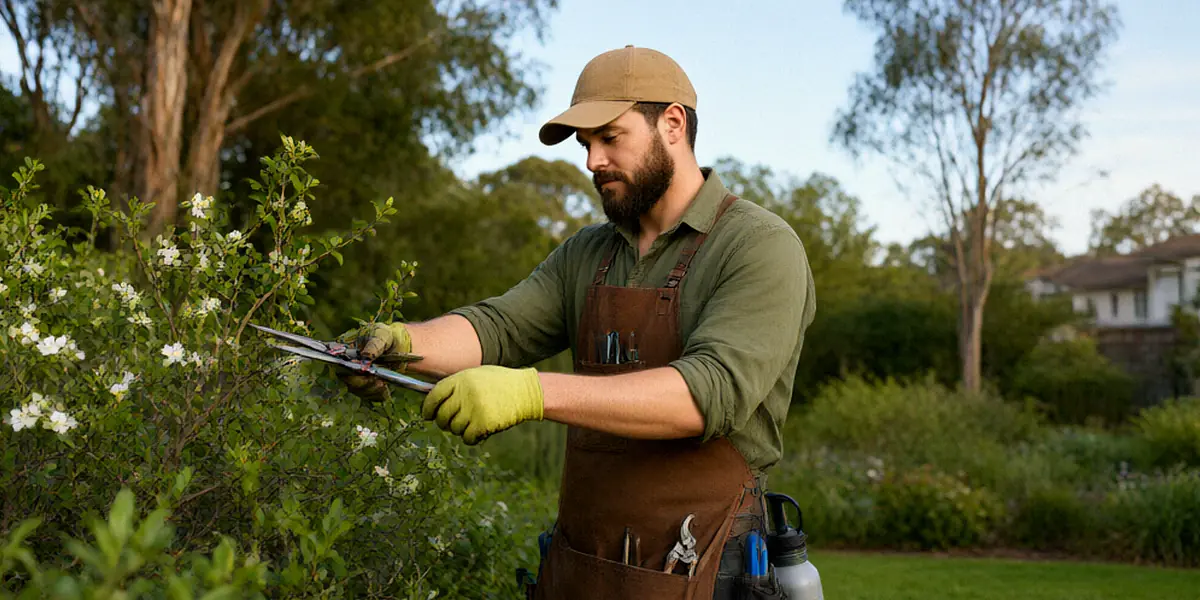
Grevillea and banksia are iconic Australian natives that require careful pruning, and for good reason. They evolved over millions of years alongside fire, drought, and nutrient-poor soils, developing survival strategies that make them respond to cutting very differently from a camellia or a rose. Many of our native plants store dormant buds deep inside old wood, or they rely on epicormic growth triggered by fire rather than by secateurs. Get the timing and technique wrong, and you can remove the very buds the plant needs to regenerate.
The Myth of ‘Never Prune Natives’
You’ll hear it at every nursery and community garden: “Never prune a native, you’ll kill it.” That’s not quite right. What kills natives isn’t pruning itself — it’s pruning badly. A light trim after flowering, done with clean sharp tools, actually encourages denser growth and more flowers. The myth probably persists because so many gardeners have tried to hard-prune a banksia into old, leafless wood and watched it die. The plant didn’t object to being pruned; it objected to being cut back past its living tissue.
How Fire Adaptations Influence Pruning
Bushfires have shaped how our natives regenerate. Some species resprout from a lignotuber at the base, others from epicormic buds under the bark, and a few — like many banksias — rely almost entirely on seed after fire. This matters because a plant that resprouts from a lignotuber can handle a much harder cut than one that only regenerates from seed. Knowing which category your plant falls into tells you how far back you can safely go.
When to Prune: Timing Is Everything
The general rule for most flowering natives is to prune straight after flowering finishes. That gives the plant a full growing season to push out new shoots before it needs to set buds again. Prune too late and you’ll cut off next season’s flowers; prune in the wrong conditions and you’ll stress a plant that’s already working hard to survive.
Spring vs Autumn Pruning
Spring is the safest window for most of the east coast, once the risk of frost has passed and the plant is actively growing. Autumn works well in warmer regions like coastal Queensland and northern NSW, where the soil is still warm enough for roots to recover. Callistemon, or bottlebrush, responds beautifully to a light trim in autumn after its main flush. Grevillea generally prefers a gentle tidy-up in spring or right after flowering, depending on the species — some flower in winter, others in summer, so check your particular variety.
Avoiding Pruning During Heatwaves
Never prune during a heatwave or a frost. Exposing fresh cuts to 40°C days strips moisture from tissue the plant can’t afford to lose, and frost can damage the tender new growth that follows. We wait for a run of mild, settled weather and prune in the early morning so the plant has the whole day to seal its wounds.
Tools and Techniques for Safe Pruning
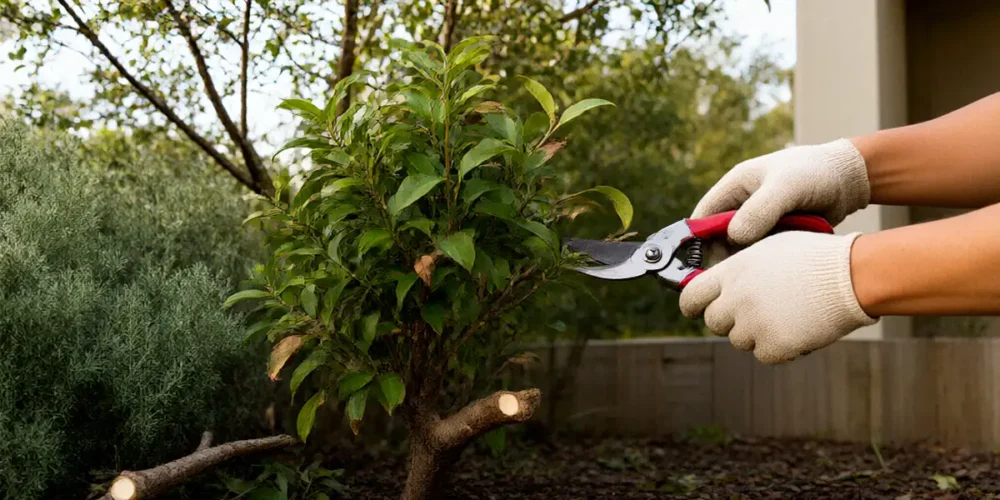
Good tools make good cuts, and good cuts heal fast. Blunt blades crush stems instead of slicing them, leaving ragged tissue that invites fungal problems. We keep bypass secateurs for stems up to about 15mm, loppers for anything up to 40mm, and a quality pruning saw for thicker branches.
Choosing the Right Tools
Felco secateurs are the benchmark for a reason — the blades hold an edge and the replaceable parts mean they last decades. For sawing, a Silky saw cuts through green timber cleanly without tearing the bark. Whatever you choose, sterilise the blades with methylated spirits between plants, especially if you’ve been working on anything showing signs of dieback.
Making the Cut: Angles and Nodes
Always cut just above a node — the point where a leaf or bud joins the stem — on a slight angle so water runs off rather than pooling. Avoid flush cuts against the trunk; leaving a small collar of tissue helps the plant seal the wound naturally. And never remove more than one-third of the plant’s growth in a single session. That rule alone has saved more natives than any other piece of advice we give.
Pruning Specific Natives: Grevillea, Banksia, and More
Different natives need different handling, so here’s how we approach the ones we get asked about most.
Grevillea: Tips for Happy Plants
Prune grevilleas lightly after flowering, taking off maybe 10–20cm of growth to encourage bushiness and more blooms. Never cut back into bare, leafless wood unless you’re certain the species resprouts from a lignotuber — many don’t. If your grevillea has become tall and woody, it’s better to replace it than gamble on a hard prune.
Banksia and Waratah: Careful Cuts
Pruning into old wood on banksia can kill the plant, full stop. These species mostly lack the dormant buds needed to shoot from bare stems, so once you cut past the green growth, there’s nothing left to regrow. Stick to tip-pruning after flowering and remove spent cones by hand. Waratahs follow a similar rule — deadhead carefully, and only cut back to a healthy leaf node.
Bush Tucker Plants: Pruning for Harvest
Bush tucker plants like lemon myrtle can be pruned during harvest, which makes them wonderfully practical. Take your leaves for cooking and you’re effectively tip-pruning at the same time. Regular harvesting keeps lemon myrtle dense and productive. Native mint, wattleseed species, and finger lime also benefit from a gentle trim as you collect.
Common Mistakes That Kill Natives
Almost every dead native we’ve seen has died from one of a handful of avoidable errors.
- Pruning banksia or waratah into old, leafless wood
- Cutting during a heatwave, frost, or the peak of flowering
- Removing more than a third of the plant in one go
- Using blunt or dirty tools that crush and infect stems
- Pruning at the wrong time of year for that species
Pruning into Old Wood
This is the big one. Banksias, many grevilleas, and most waratahs simply can’t shoot from old wood. Once you’ve cut below the lowest living leaves, the branch is dead. If you’re unsure, prune less than you think you need to and reassess next season.
Over-Pruning and Shock
Drought-tolerant plants such as westringia are more forgiving but still need proper technique. Even a tough plant can go into shock if you strip more than a third of its foliage at once, especially in dry conditions. Take it slowly, in stages, across a couple of seasons.
Aftercare: Helping Your Natives Recover
What you do in the fortnight after pruning matters as much as the cut itself. Fresh wounds need moisture, protection, and gentle nutrition — not a heavy feed.
Watering and Mulching
Water deeply once or twice after pruning, then return to your normal routine. Overwatering is a bigger risk than underwatering for established natives. Apply a 5–7cm layer of coarse mulch around the base, keeping it clear of the trunk, to hold moisture and suppress weeds.
Fertilising Natives Safely
Australian natives generally prefer low-phosphorus fertilisers like Bush Tucker brand, because many species evolved in soils where phosphorus was scarce and can be poisoned by standard garden fertiliser. Avoid high-phosphorus products entirely. A light application of a native-specific fertiliser in spring is plenty.
FAQ
Can I prune a banksia that’s grown too tall?
Only lightly, and never into old leafless wood. Banksias rarely resprout from bare stems, so if the plant has outgrown its spot, it’s usually safer to replace it than to attempt a hard renovation prune.
What’s the best time to prune grevillea?
After flowering, when the plant is actively growing. For most species that means spring or early summer, though winter-flowering varieties should be pruned in late winter or early spring. Avoid pruning during heatwaves or frost.
Do I need special fertiliser after pruning natives?
Yes — use a low-phosphorus native fertiliser such as Bush Tucker. Standard all-purpose fertilisers can harm phosphorus-sensitive species like banksia and grevillea.
How much can I safely remove in one prune?
No more than one-third of the plant’s total growth. For sensitive species like banksia and waratah, stick to tip-pruning and deadheading only.
Can I prune lemon myrtle while harvesting?
Absolutely. Harvesting leaves is a form of tip-pruning, and regular light harvesting keeps lemon myrtle dense and healthy. Just avoid cutting back into thick old wood.
Pruning natives doesn’t have to be a gamble. With the right timing, sharp tools, and a healthy respect for how each species grows, you can shape a grevillea, tidy a callistemon, or harvest lemon myrtle without losing a single plant. We’d love to hear how your own natives respond — share your pruning wins and lessons in the comments, and let’s keep our native gardens thriving together.